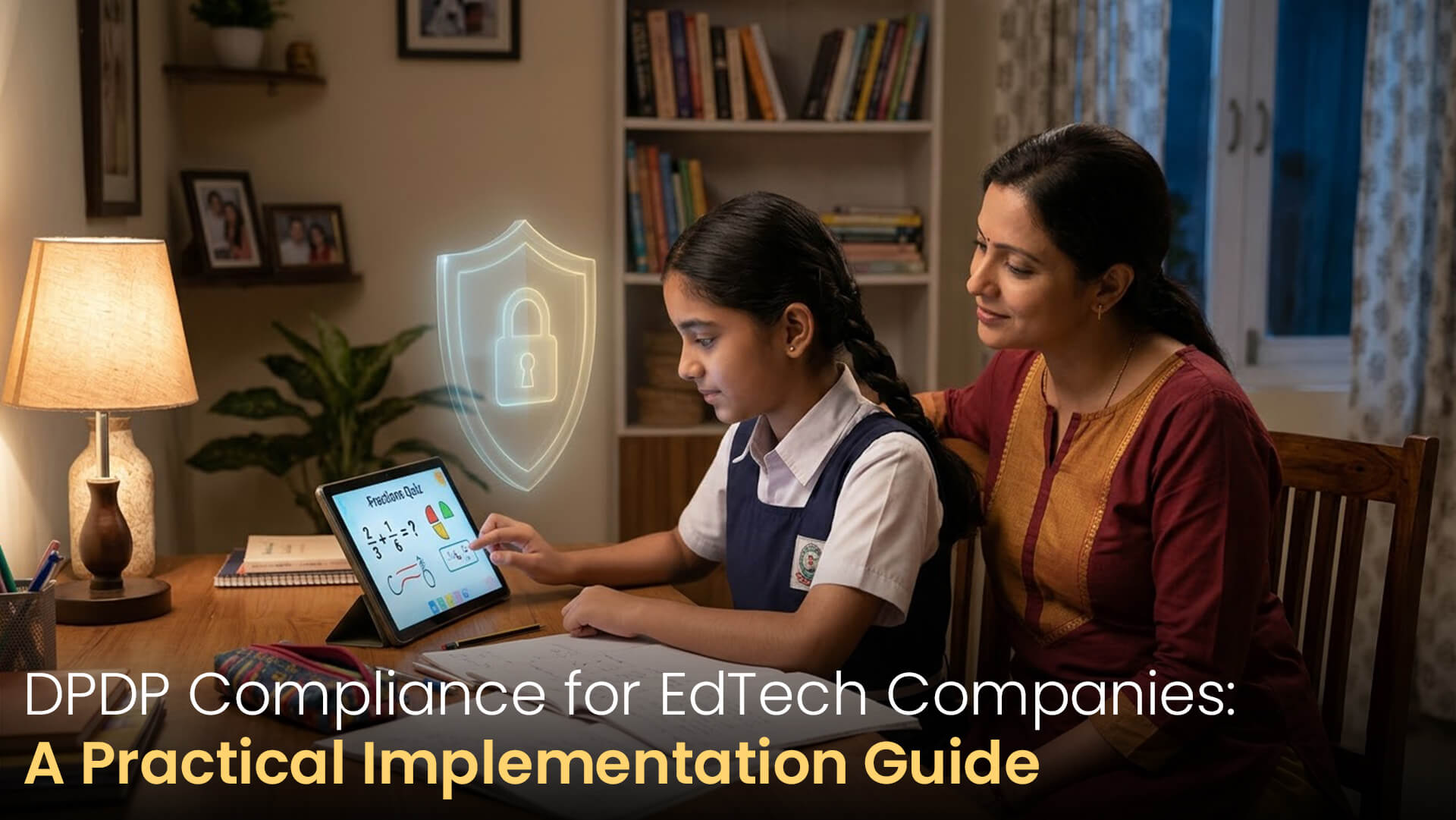
It’s 9 pm on a Sunday. A class 8 student is halfway through a maths quiz on your app. In the background, an ad pixel logs that she struggles with fractions, and a counsellor’s dashboard flags her parents as a “hot lead“.
Nobody on your team planned anything sinister. It’s just how the funnel was built. But under the DPDP Act, almost every part of that picture is now a problem.
So what does DPDP compliance for EdTech companies actually look like? Less scary than people fear, but more work than a new privacy policy.
Why EdTech sits right in the firing line
Most laws treat children as a footnote. Not this one. In India you’re a child till your 18th birthday, a good five years past the age most global apps are built around. And Section 9 is blunt about what follows. A parent or lawful guardian has to say yes, and you need to be able to show it really was them. Nothing you do with the data should be likely to harm the child. And no tracking, no behavioural monitoring, no ads aimed at kids. That last one is where growth teams usually wince.
For most EdTech platforms, kids aren’t an edge case. They’re pretty much the whole customer base. Breaching the children’s obligations can draw a penalty of up to ₹200 crore, and failing to keep data secure can go up to ₹250 crore.
Timing-wise, the Rules came out in November 2025 and the core duties land on 13 May 2027, unless the government brings them forward.
Why a founder should care
It’s tempting to hand this to legal and move on. Don’t. Most of the fixes touch growth: how you onboard, how you retarget, how counsellors call parents. Only leadership can make those calls.
There’s an upside too. Schools now ask vendors hard questions about student data, and parents talk. Clean, simple controls win trust no ad budget can buy.
What the law expects from an EdTech platform
In plain words, the Act wants a handful of things. Be upfront about what you collect and why you need it. Get consent that means something, from a parent if the learner is a kid. Don’t quietly reuse the data for something else later. Look after it, keep it correct, and throw it away once the job’s done. And when a parent writes in with a complaint, somebody should actually reply.
Yes, the Fourth Schedule carves out some processing by educational institutions. But it was written for schools. Teaching things doesn’t make your app one, so if you work as a school’s vendor, get advice on how far that carve-out really reaches.
| The law says | You decide | |
|---|---|---|
| Who counts as a child | Anyone under 18 | How you find out a user’s age at sign-up |
| Parental consent | Must be verifiable | Which verification method fits your flow |
| Tracking and ads | Not allowed for children | What your analytics and marketing stack look like |
| Security | Reasonable safeguards, including logs | Your tools, vendors and access model |
Illustrative summary of Sections 8 and 9 and the DPDP Rules, not legal advice.
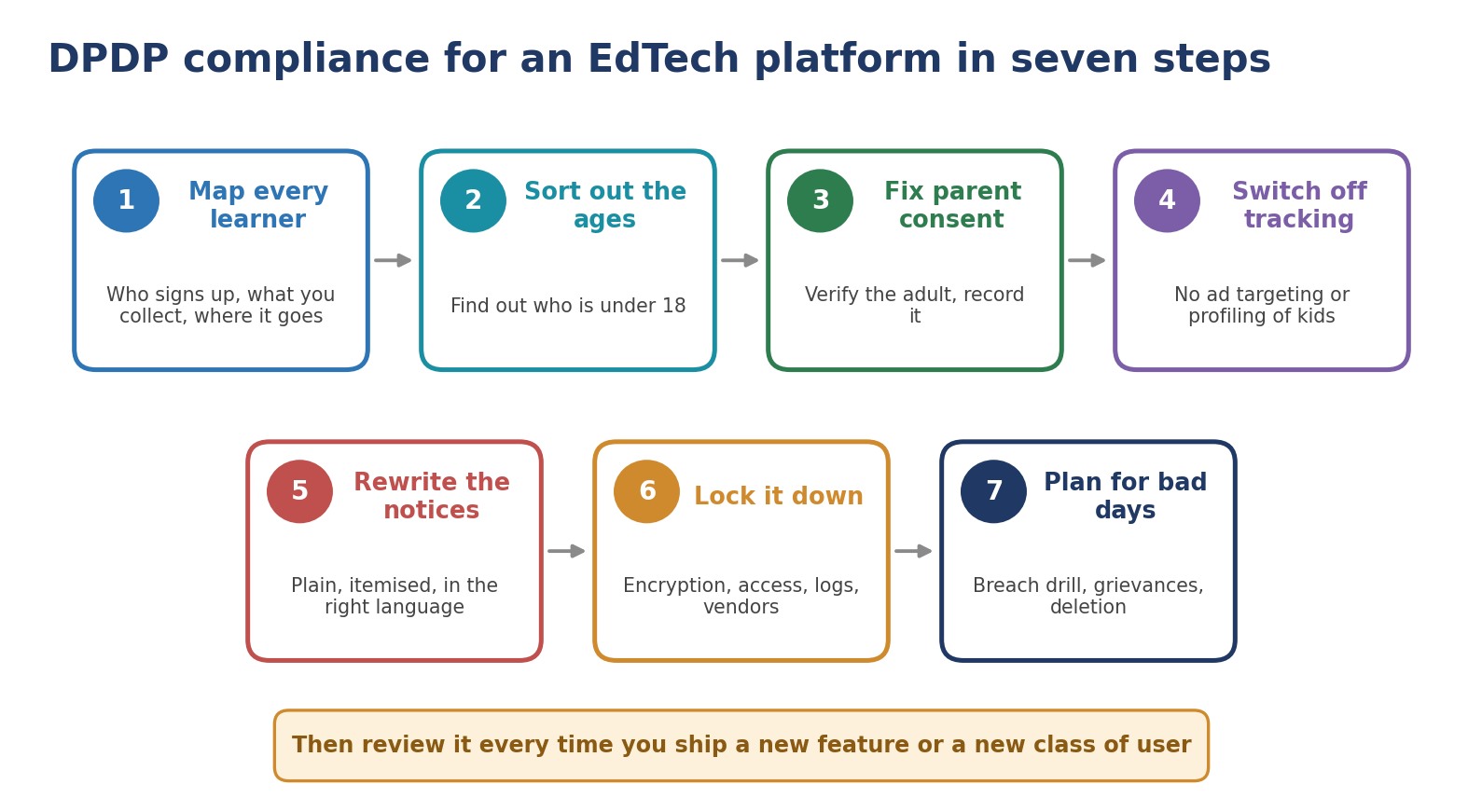
Figure 1. DPDP compliance for an EdTech platform in seven steps.
Putting DPDP compliance for EdTech companies into practice
Here’s a working order for most platforms.
1. Map every learner journey. Start with sign-up and follow the data. What do you collect, from whom, and why? Which vendors touch it?
2. Sort out the ages. You can’t protect children if you don’t know who they are. Ask for age or date of birth early, and design the flow so a child’s account goes down a different path.
3. Fix parental consent. Rule 10 says you have to be reasonably sure the person saying yes is a real, identifiable adult. If the parent already has a verified account with you, that often does the job. If not, they can share identity and age details, or a token through something like DigiLocker. Whichever route you pick, note down how the check was done and when. Six months later, nobody will remember.
4. Switch off tracking for kids. This one hurts. Ad pixels, lookalike audiences, retargeting and behavioural profiling can’t run on children’s data. Keep personalised learning tied to teaching, never marketing.
5. Rewrite your notices. The Rules want notices that stand on their own, list the data item by item, and use plain language. A parent should get it on a phone in two minutes.
6. Lock down the data. Encrypt it, mask it where you can, restrict who sees student records, and keep access logs. Sign proper contracts with every processor, because their mistakes are still yours.
7. Get ready for a bad week. Breaches have a habit of landing at the worst time, usually exam season. So decide now who calls whom. The law wants affected users and the Data Protection Board told without delay, and a proper write-up to the Board inside 72 hours. Put a grievance contact on the site as well, and make sure replies go out within 90 days.
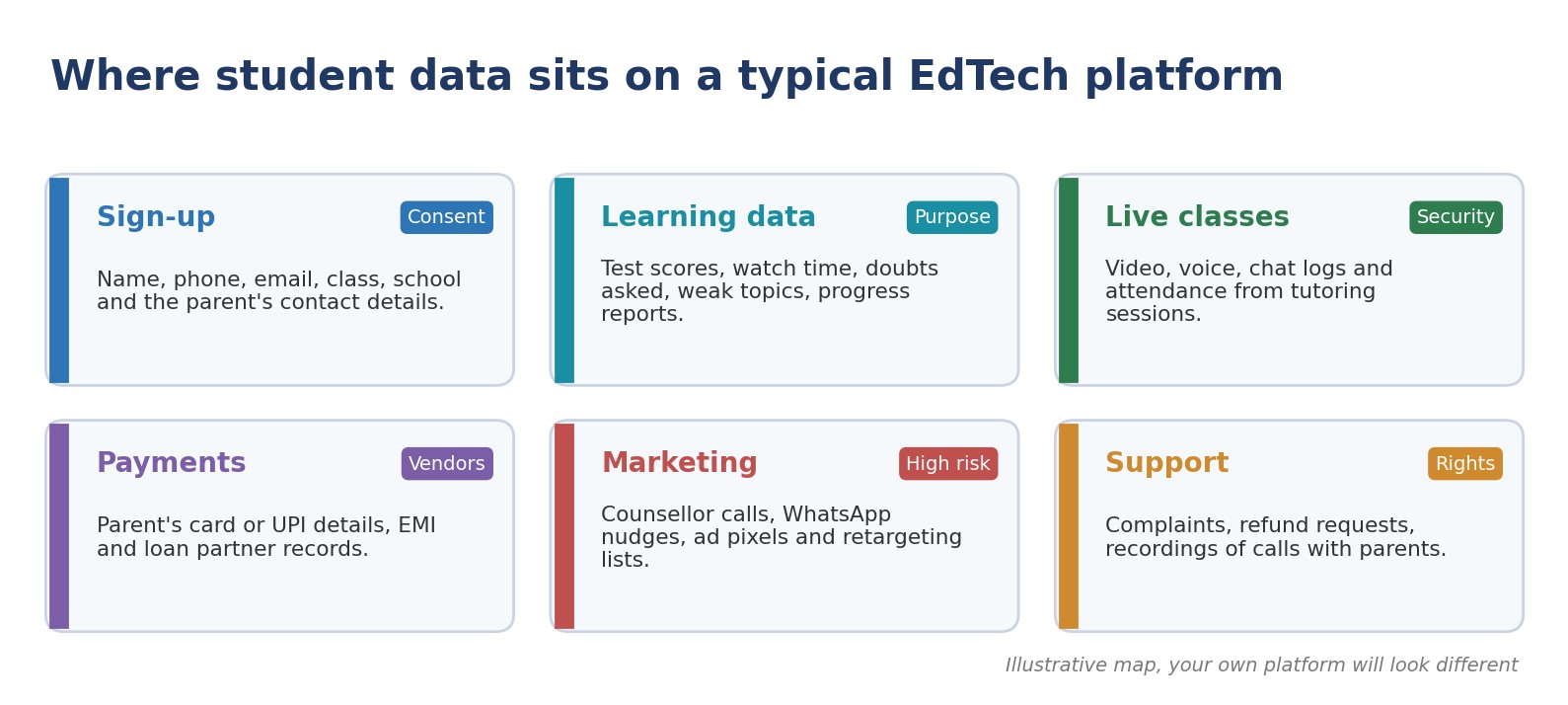
Figure 2. A rough map of where student data ends up inside an EdTech product.
What good looks like
Forget the 60-page manual. A data map, a consent record per account, a notice parents can follow, signed vendor contracts, a breach plan and a retention schedule will do.
One example, to make it real. Feature: weak-topic report emailed to parents. Data used: quiz scores. Lawful basis: parent’s consent at sign-up. Shared with: email vendor only. Kept for: as long as the account is active. Owner: head of product.
Who should own it
Start with the founder. Most of the hard calls here cost sign-ups, and only they can make them. Then the DPO, who keeps things moving. Product and engineering, since they know where data really goes (often not where the docs say). Marketing and sales, because honestly that’s where most of the risk sits. And one senior person willing to put their name against whatever risk is left.
Where EdTech teams trip up
The same few ways, again and again. They treat “tick here if you’re a parent” as verification, which it isn’t. They leave the ad pixel running on pages kids use. They forget free trial users, who still handed over data. And they assume the school will handle consent, without ever checking whether it did.
What to do this quarter
If you only manage five things before the year is out, make it these.
- Pick your three busiest learner journeys and trace each one, start to finish.
- Ask for age up front, and send under-18s down their own path.
- Choose how you’ll verify parents, then try it out on a handful of real ones.
- Go through your marketing tools and switch off anything that follows kids around.
- Name an owner for DPDP compliance and give them a budget.
If you want a head start, Consiva’s consent and preference management handles parental consent records, itemised notices and withdrawal in one place, and its data discovery shows you where student data really sits. Take a look at the pricing page, or talk to the team.
Frequently Asked Questions
Yes, if you process the digital personal data of people in India, the Act applies to you, whatever your size. It also covers offshore platforms that offer courses to learners in India. The children’s rules in Section 9 matter most for EdTech, because so many users are under 18. Smaller startups get no general exemption, so it’s wise to start early and keep the effort proportionate.
Anyone under 18 is a child under the DPDP Act, which is a higher age than many global laws use. That means most school students, and many first-year coaching aspirants, fall inside the children’s rules. You’ll need verifiable parental consent before processing their data. You also can’t track them, monitor their behaviour or show them targeted ads.
Sadly, no. Rule 10 expects you to check that whoever is consenting is an adult you could actually identify, and a checkbox proves nothing on that front. A verified parent account you already hold works, and so does a DigiLocker token or ID details the parent chooses to share. If the Board ever asks how you knew it was the parent, “they ticked a box” won’t go down well.
You can, though it needs a bit of care. The rule of thumb is simple enough: data from a child’s quizzes should only ever be used to teach that child better. The moment it turns up in ad targeting, lead scoring or a lookalike audience, you’ve crossed a line. And if a feature starts to feel more like watching kids than teaching them, pause and get advice before it goes live.
First, the people affected, which for most EdTech platforms really means the parents. They should hear it from you quickly, not from a news site. The Data Protection Board has to be told too, with a fuller report inside 72 hours on what went wrong, how bad it is and what you’ve done since. Skip the notice and you’re looking at a possible penalty of up to ₹200 crore.
The big date is 13 May 2027, when notices, consent, children’s data, security and breach reporting all kick in. There’s been talk in Delhi of pulling some dates forward, so check the gazette every now and then. Honestly though, things like age checks and parent flows take a few release cycles to get right. Teams that start this year will have a far calmer 2027.